

Second-Hand Carton Packaging Machines: Red Flags to Watch Before Buying
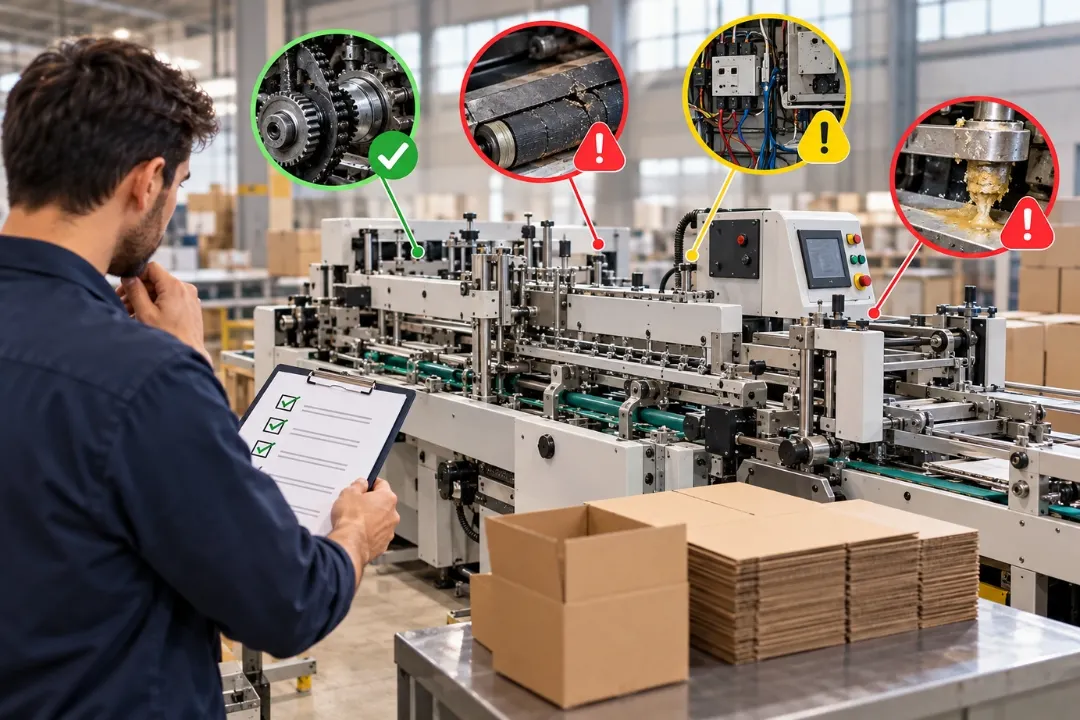
A used folder gluer can look spotless in the listing photos and still cost you six months of downtime. Second-hand carton packaging machines are a fair way to start or expand when cash is tight, and plenty of converters run them well for years. The catch is that a clean machine and a healthy machine are different things, and sellers know which one buyers notice first. What Should You Check Before Buying Second-Hand Carton Packaging Machines? Before buying second-hand carton packaging machines, verify four things: the full service history, a live test run on your own board, the condition of wear parts like gears, bearings and glue systems, and whether spare parts and technical support still exist. Any seller who resists one of these checks is your first red flag. The sections below cover each check, plus the warning signs buyers tend to miss. 1. The Seller Won’t Let You See It Run This one ends the conversation for me. A working machine can run on camera or during your visit. If all you get is photos, or “it was running last month,” walk away. Bring your own sheets. Folding carton buyers should test their usual board, and corrugated buyers their usual flute, because a machine that behaves with the seller’s sample can jam on yours. Ask for a run of an hour or more at the speed you plan to use. Watch the glue lines, crease quality, corner squareness and whether the delivery stacks cleanly. This guide to folder gluer acceptance checks lists the speed, crease and bottom-lock tests worth copying. 2. The Service History Is Missing No logs and no parts invoices, or a nameplate year that doesn’t match what the seller told you. Any one of these should slow you down. Without records you can’t tell whether the machine ran one shift or three, or whether anyone cleaned the glue system on schedule. A machine eight years old with a full logbook is often the safer buy than a younger one with none. If you can, speak to the previous operator. 3. Fresh Paint Over Tired Parts Paint is cheap. Bearings, gears, chains, feeder belts and creasing rollers are not. Open the guards and run the machine slowly with your ear close. Grinding, knocking or a steady click means something is worn. Look at suction cups and belts for glazing and cracks, check the glue tank and hoses for leaks, and press the hoses to see whether they’ve gone hard. On a die cutter, ask whether the platen is level, because an uneven platen gives you uneven cuts on every job. 4. Controls You Can’t Replace Mechanical wear is fixable. A dead control board for a PLC the maker discontinued years ago might not be. Note the brand and model of the PLC, touchscreen and servo drives, then ask whether the manufacturer still sells parts, or still exists. A part that has to be imported can leave the machine idle for weeks. Check the manual too. If it’s missing, or in a language your operators can’t read, add that to your cost. 5. The Specs Don’t Match Your Jobs A cheap machine isn’t cheap if it can’t run your work. Check maximum and minimum sheet size, board thickness range, the box styles it can fold (lock-bottom, crash-lock, four- and six-corner) and how many glue guns it carries. Ask what tooling and attachments come with it, since dies and extras are often sold separately. 6. Missing Guards and Messy Wiring Look for bypassed interlocks, guards that have been removed, emergency stops that don’t cut the machine, and electrical panels full of added wires. Confirm that voltage, phase and frequency match your plant. Once the machine is on your floor, an operator injury is your problem, not the seller’s. 7. A Price That Doesn’t Add Up If a machine sits well below comparable listings, ask why. Sometimes the owner is closing a plant. Sometimes there’s a defect nobody mentions. Ask for proof of ownership and confirm no loan is registered against the machine. Be wary of sellers who refuse a video call or push you to wire money fast. The Hidden Costs of Second-Hand Carton Packaging Machines The listing price is rarely the real price. Dismantling, freight, rigging, reinstallation, commissioning, operator training and the first round of replacement parts all land on you. We broke down these ongoing expenses in our post on the hidden costs of owning a packaging machine. Langen’s white paper on buying used packaging machinery makes a related point: appearance is the weakest evidence you have. So price the used machine all-in, then get a quote for a new one. The gap is sometimes smaller than the listing suggests, and a new machine comes with a warranty, installation and service support. When Second-Hand Carton Packaging Machines Still Make Sense They make sense when the machine is simple and mechanical, parts are easy to find locally, the seller shows records, and a technician has inspected it. A semi-automatic two-piece gluer is a typical example. They make less sense for high-speed servo machines with obsolete electronics, where one failed board can stop production for weeks. If your volumes are growing, compare against a new automatic folder gluer. Robus India builds folder gluers, die cutters and laminators in Greater Noida and has installed over 410 machines, with installation and service handled by its own engineers. Frequently Asked Questions Is it safe to buy a used carton packaging machine? Yes, if you inspect it, watch it run on your own board and see its records. Skip any of those and you’re gambling. How old is too old? There’s no fixed age. Parts availability and physical condition matter more than the build year. Who should inspect the machine? A technician who knows that machine type, not only an operator. If the machine is overseas, hire an independent inspector. Which documents should I ask for? Ownership proof, nameplate details, service logs, manuals, electrical drawings and … Read more