
Live Demo :

ROBUS INDIA at CHINA PRINT 2025 | Discover how we enhance your packaging production with precision and efficiency! | Meet us at Booths: W2-007 (Dayuan), A3-522 (YCIA), E4-001/002 (Xinxing) | 15–19 May 2025 | China International Exhibition Center (Shunyi Hall), Beijing | info@robusindia.com | +91 81783 09461 | www.robusindia.com

Why D2C Brands in India Are Investing in Custom Carton Machinery

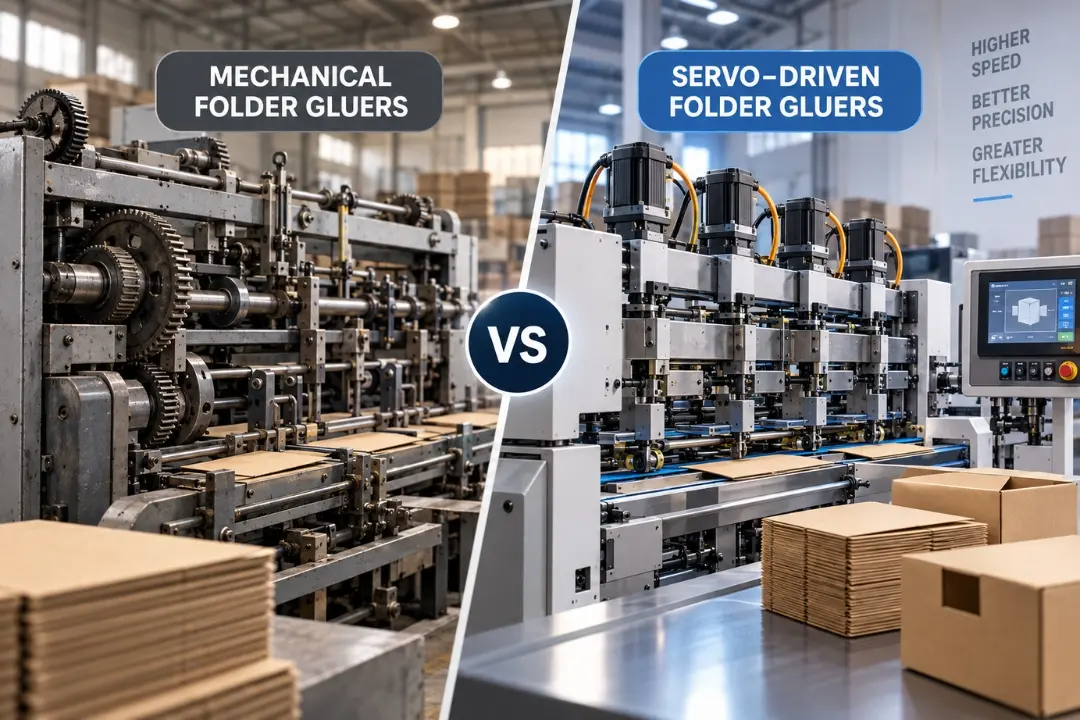
Custom carton machinery producing packaging boxes for D2C brands in India

A shipment lands on someone’s doorstep in Bengaluru. They film themselves opening it for Instagram before they’ve even read the product label. That fifteen-second clip is doing more brand work than the ad that got them to click “buy” in the first place – and the box is the set design. This is why packaging stopped being a line item and became a growth lever. India’s D2C sector is on track to cross the $100 billion mark by 2026, and the brands pulling ahead aren’t just spending more on marketing. They’re rethinking what happens on the factory floor before the box ever reaches a courier bag.   The box has become part of the pitch For a D2C brand, the carton is the only physical touchpoint a customer has with a company they otherwise know only through a screen. A crushed corner, a generic mailer, tape residue over a logo – any of it undercuts a campaign that cost real money to run. Industry data backs this up: over half of online shoppers say they’re more likely to reorder from a brand that ships in premium packaging. That’s a hard number to ignore when customer acquisition costs keep climbing and margins stay thin. Retention is cheaper than acquisition, and packaging is one of the few retention levers a brand fully controls.   Standard cartons don’t survive contact with D2C volumes Here’s the mismatch. Most Indian carton suppliers were built for retail-scale, single-SKU orders – a few large runs a year. D2C brands don’t work that way. A skincare label might run six SKUs, three seasonal variants, and a festive limited edition, all shipping in parallel, all needing different die-lines and finishes. Order a standard carton run and you’re stuck with minimum order quantities of 500 to 1,000 units per design in most Indian markets. For a brand shipping 100 to 300 orders a month, that’s dead capital sitting in a warehouse, tied up in packaging for a product variant that might get discontinued next quarter. So brands do one of two things. They either compromise – plain kraft boxes with a sticker, which reads as cheap past a certain revenue point – or they bring the production in-house, closer to where the design decisions actually get made.   What custom carton machinery actually solves This is where machinery choice stops being a manufacturing detail and starts being a brand decision. Three capabilities matter most: Precision on short runs: An automatic die-cutting machine holds registration tight enough that a brand can run 800 units of one SKU on Monday and 800 of a completely different die-line on Tuesday, without the creasing or misalignment that shows up when a machine is stretched past its design intent. Speed without losing the fold quality: A well-built automatic folder gluer machine can turn flat die-cut sheets into finished, glued cartons at a pace that matches quick-commerce dispatch windows – a 10 to 15 minute delivery promise is worthless if packaging is the bottleneck sitting behind it. Fast changeovers: This is the one people underestimate. A machine that takes four hours to switch from one carton size to another effectively kills any brand’s ability to run small, frequent batches. The changeover time, not the top-rated speed, decides whether custom packaging at D2C volumes is even viable. Robus India’s automatic die-cutting machines were built around exactly this problem – folding carton converters serving D2C-scale clients needed the accuracy of large-format equipment without the changeover penalty. That’s a narrower ask than what most legacy machinery was designed for, and it’s the gap a growing number of Indian packaging investments are trying to close.   The capex math brands are actually running Buying machinery isn’t the default move for every brand – it rarely makes sense below a certain order volume, and outsourcing to a converter stays the right call for brands still finding product-market fit. But the calculation shifts once a brand crosses roughly 5,000 to 8,000 shipments a month across multiple SKUs. At that scale, the per-unit cost of outsourced custom cartons – with rush fees, minimum runs, and lead times of two to three weeks – starts to outweigh the fixed cost of owning equipment. Brands that make the jump usually cite three reasons: control over turnaround during festive spikes, the ability to test new box designs without committing to five-figure minimum orders, and – less discussed but just as real – not being at the mercy of a converter’s other clients when a Diwali order backlog hits. The market’s growth trajectory supports the timing. India’s e-commerce packaging segment, valued at roughly $4.2 billion in 2026, is expected to grow at close to 12.5% annually through 2031, with paper and paperboard formats holding over half the share as brands move away from plastic-heavy mailers. Brands that get their machinery decisions right now are building capacity ahead of that curve instead of scrambling to catch up in 2028.   What to check before signing the purchase order A few things separate a good machinery investment from an expensive mistake: Board range compatibility: Confirm the machine handles the GSM range your actual SKUs use, not just a demo sample. Folding carton board and heavier corrugated stock behave very differently under the same die pressure. Changeover time, tested, not quoted: Ask for a live demonstration of a full changeover between two dissimilar carton sizes, timed. Local service response: A machine that’s down for a week during a sale period is worse than not having one. Check where the manufacturer’s service engineers are based relative to your factory. Room to scale the run size: Buy for where volumes will be in 18 months, not where they are today – but don’t over-buy capacity that sits idle for years.   None of this is exotic engineering. It’s closer to a logistics decision dressed up as a machinery purchase. D2C brands that treat it that way – evaluating changeover speed and service support as seriously as they’d evaluate a new fulfilment … Read more

Hidden Costs of Owning a Packaging Machine Beyond the Purchase Price

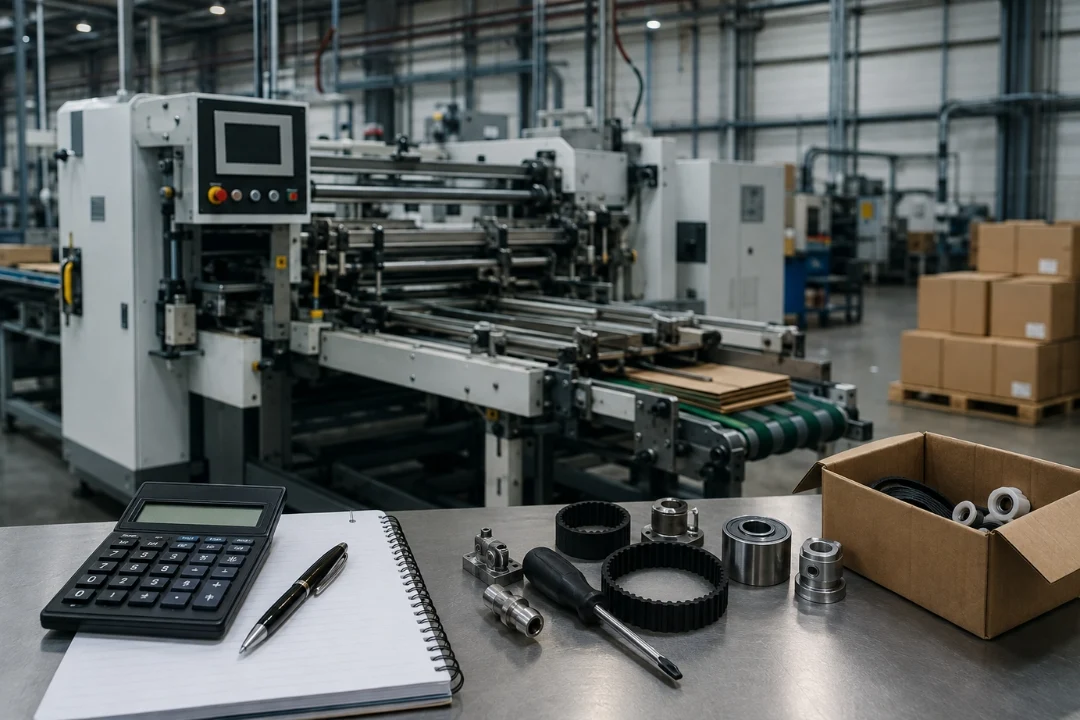
Hidden Costs of Owning a Packaging Machine shown with industrial equipment, spare parts, and maintenance tools

A packaging machine quote never tells the whole story. The number on that proforma invoice is just the entry ticket – what you pay after installation is where most buyers get surprised. Ask any plant manager who’s run a folder gluer or die cutter for five years, and they’ll tell you the price barely scratches the surface. Industry analysts who study equipment lifecycle costs have found that purchase price often makes up only 20-30% of a machine’s total cost over a decade – the rest goes into running it, fixing it and replacing it. If you’re evaluating a carton packaging machine right now, here’s where the real money goes after the invoice is paid.   Installation and Site Preparation Most quotes cover the machine. Few cover what it takes to get that machine running on your factory floor. Foundation work, electrical panel upgrades, compressed air lines, and structural changes to fit the machine’s footprint can add 5-10% on top of the machine cost. Older factory buildings need more of this – a panel wired for 15 kW machines doesn’t automatically handle a servo-driven folder gluer pulling three times that load. Then there’s commissioning: the days, sometimes weeks, your engineer and the supplier’s technician spend fine-tuning the machine before it hits rated speed. That’s paid time with no output to show for it.   Spare Parts and Consumables This is where buyers get blindsided most often, especially with imported machines. Rubber rollers, glue nozzles, cutting dies, timing belts, and sensors wear out on a schedule the sales brochure never mentions. On machines built with proprietary components, a single replacement part can take four to six weeks to arrive from overseas – and cost triple what a locally sourced equivalent would. Before you sign anything, ask two questions: what wears out fastest on this specific model, and how far away is the nearest stock of those parts? A machine that’s ₹5 lakh cheaper upfront isn’t cheaper if you’re paying air-freight premiums for a die every quarter.   Maintenance Isn’t Optional – It’s a Line Item Every packaging machine needs a maintenance budget, and it’s rarely the number the sales team quotes you. Preventive maintenance – lubrication schedules, belt tension checks, glue system cleaning, alignment calibration – keeps small issues from becoming five-figure repairs. Skip it, and you’re not saving money, you’re deferring a bigger bill. We’ve put together a preventive maintenance schedule for die-cutting machines that breaks this down by daily, weekly, monthly, and annual tasks, and it applies to most carton machinery with small adjustments. Reactive maintenance – the kind you do after something breaks – costs more in every direction: emergency technician visits, expedited parts shipping, and the production you lose while the line sits idle.   Downtime Is the Cost Nobody Puts on a Quote Here’s the math most buyers skip: what does an hour of stopped production actually cost your plant? Multiply your hourly output value by the hours a machine sits idle for repairs, part replacement, or operator troubleshooting, and downtime often becomes the single largest hidden cost over a machine’s life. It’s also the hardest to budget for because it depends on things you can’t fully predict – how reliable the build quality is, how fast your supplier responds, and how far the nearest service engineer is from your plant. This is exactly why after-sales response time deserves as much weight in your buying decision as the machine’s rated speed.   Operator Training and Manpower A machine is only as productive as the person running it. Training costs – both the direct fee if the supplier charges for it, and the indirect cost of lost output while operators climb the learning curve – add up fast, particularly on machines with digital HMIs and servo controls that differ from what your team is used to. High operator turnover compounds this. Every time a trained operator leaves, you’re back to square one on productivity until the replacement is up to speed. Factor in retraining cycles when you’re calculating what a machine will really cost you to run.   Energy Consumption Adds Up Quietly Two machines with identical output speeds can have very different power bills. Servo-driven systems typically draw less power than older hydraulic or pneumatic designs doing the same job, but the difference only shows up on your electricity meter over months, not on a spec sheet at the time of purchase. If you’re running multiple shifts, this gap between an efficient and an inefficient machine can run into lakhs annually – money that never appears anywhere in the original purchase decision.   Depreciation and Resale Value Not every machine holds its value the same way. Build quality, brand reputation, and the availability of spare parts all influence what you can recover if you sell or trade in the machine later. This is also where the new-versus-used decision loops back in. If you’re weighing a lower upfront cost against long-term reliability, our breakdown of new vs refurbished carton packaging machines walks through how that trade-off plays out in real maintenance and resale numbers, not just sticker price.   Compliance, Insurance, and Warranty Gaps Depending on your industry, machines may need periodic safety certification, calibration audits, or compliance checks – costs that rarely show up in a sales conversation. Insurance premiums also shift based on the machine’s safety rating and claims history for that model. And read the warranty terms closely. A warranty that excludes electronics, or requires you to use only the OEM’s technicians at premium rates, isn’t the safety net it looks like on paper. Some of the most painful “hidden” costs are hidden in the fine print of a document you already signed.   How to Actually Calculate What a Machine Will Cost You Before you commit, work through this instead of just comparing quotes: Add up 5-year maintenance costs, not just the first-year service contract Price out the top 5 wear parts and check local availability, not just cost Estimate downtime cost per … Read more

Import vs Indian-Made Packaging Machinery: A Cost & Support Comparison

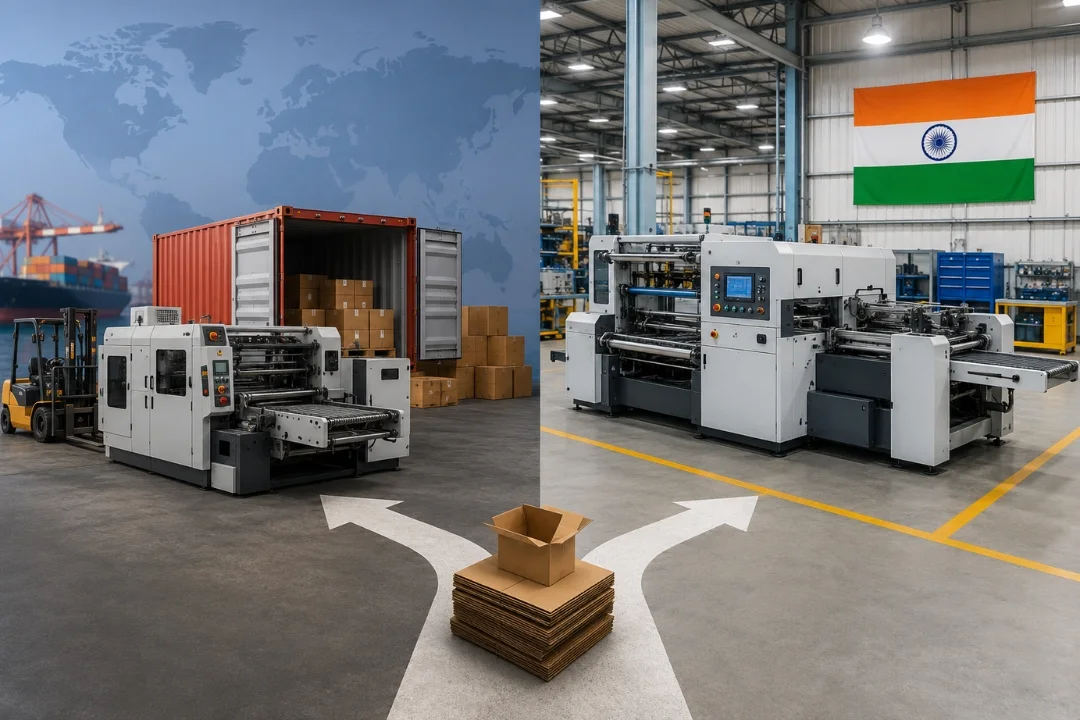
Import vs Indian-Made Packaging Machinery comparison showing imported and Indian carton packaging machines with logistics and local manufacturing support.

Every carton or corrugated box plant reaches this fork in the road eventually. You’ve outgrown your current setup, you have a budget approved, and now someone in the room says “let’s just import a German or Chinese line, it’ll be worth it.” Someone else pushes back. Both of them are partly right, and partly guessing. I’ve sat through enough of these conversations to know the decision usually gets made on gut feeling, not numbers. So here’s the actual math, the actual support reality, and what tends to bite people six months after the machine is running.   What “Import” Really Costs, Beyond the Invoice The quoted price on an imported die cutter or folder gluer is never the price you pay. By the time the machine lands at your factory gate, you’ve added: Basic customs duty – typically around 7.5% on capital machinery, depending on classification IGST at 18% Social welfare surcharge of roughly 10% on the duty amount Ocean freight, marine insurance, and port handling CHA (customs house agent) fees and inland transport from the port to your plant Currency risk between quotation and payment, which on a six-month lead time can move 3-5% either way Stack those together and a machine quoted at, say, ₹1.2 crore FOB can land closer to ₹1.55-1.65 crore once it’s actually on your factory floor and running. None of this shows up in the glossy brochure or the first email from the overseas sales agent. Then there’s time. Ocean freight from Europe or China runs 4-6 weeks by itself, and that’s before you count manufacturing lead time (often 4-6 months for a built-to-order line), customs clearance, and the wait for the OEM’s engineer to get a visa and fly in for commissioning. A full cycle from PO to production can stretch past 8-9 months.   Where Indian-Made Machinery Actually Wins Domestic manufacturers don’t carry any of the import overhead above, and that shows up directly in the quote. Machines built in India by an established manufacturer typically run 25-40% cheaper than a comparable imported model, purely from skipping duty, freight, and currency exposure. That gap alone can fund a second machine, an extra shift’s worth of working capital, or a proper AMC for the next three years. Lead times are shorter too, since there’s no ocean crossing and no waiting on a foreign engineer’s travel schedule. Most Indian manufacturers can turn a standard configuration around in 8-12 weeks, and the commissioning engineer is a same-day drive away, not a six-week visa process away. The quality gap that used to justify importing has also narrowed a lot in the last decade. Servo-driven feeders, touchscreen HMI panels, vision-based glue inspection, CE-rated electricals – these aren’t exclusive to European or Japanese lines anymore. Many Indian manufacturers now build to the same component standards (SEW, Siemens, Schneider drives are common across both) while assembling and calibrating the machine at home, where they can walk the shop floor daily instead of managing it over email.   The Part Nobody Mentions Until It’s Too Late: Support This is where the real cost of importing shows up, usually a year in, not on day one. When an imported machine throws a fault at 11 PM on a production night, you’re not calling a local number. You’re emailing a support desk in a different time zone, waiting for a response, and then waiting again for a spare part to clear customs – which, for anything urgent, can mean days of downtime on a line that was supposed to be running double shifts. Spare parts for imported machines often have to be re-imported themselves, with the same duty and freight math applied all over again, except now you’re paying rush shipping on top. Domestic manufacturers solve this by being, quite literally, closer. An engineer can be on-site within a day for anything serious, spares sit in a local warehouse instead of a container ship, and there’s no language or time-zone gap when you’re trying to describe a fault at 2 AM. Robus India’s after-sales service, for instance, is structured around exactly this – pre-installation site checks, scheduled maintenance visits, and component replacement handled by engineers who are a phone call and a few hours away, not a support ticket in a different country.   A Straight Cost Comparison Imported Machine Indian-Made Machine Landed cost vs quote +25-35% (duty, IGST, freight, SWS) Minimal addition, mostly local transport Typical delivery 6-9 months 8-12 weeks Spare parts lead time Weeks (re-import + customs) Days (local stock) Service response Email/ticket, cross-timezone Same-week site visit Upfront price Higher 25-40% lower on average So, Which One Actually Makes Sense? If you’re running an ultra-high-volume operation where a specific European brand’s throughput numbers are the difference between winning and losing a contract, importing can still make sense – some jobs genuinely need that ceiling.  But for the vast majority of folding carton and corrugated converters in India, the case for importing has gotten thinner every year. India’s packaging sector is one of the fastest-growing in the world, and a large share of that growth is mid-sized converters upgrading their post-press lines, not the handful of plants running at the absolute top end of speed. According to IBEF’s industry data, the sector is expanding at 22-25% annually, and most of that expansion is happening in exactly this segment. For that segment, a well-built Indian folder gluer or die cutter gets you to the same production floor, at a lower landed cost, with a service engineer who actually answers the phone in your time zone. The premium you’d pay for an import badge increasingly buys you paperwork and shipping delays, not extra performance. Before you sign anything, do three things: get the full landed cost in writing (not just FOB), ask for a reference customer you can actually call or visit, and check what the service response time looks like on paper versus what previous buyers say it looks like in practice. That last one tells you more than any … Read more

Braille Packaging Compliance for Pharma: Rules Every Manufacturer Must Know in 2026

Braille packaging compliance on pharmaceutical carton with embossed Braille during automated pharma packaging production

If you manufacture medicines for the EU, UK, or India, Braille on your cartons isn’t optional anymore – and in 2026, the rules around it are tightening on multiple fronts at once. Between the EU’s long-standing Braille mandate, the UK’s parallel requirements, and India’s CDSCO now actively drafting its own framework, pharma manufacturers who treat Braille as an afterthought are running into rejected artwork, delayed launches and in some cases, held shipments at customs. This piece breaks down what’s actually required, where the gaps in most companies’ processes are, and what’s changing this year.   What Braille packaging compliance actually means Braille packaging compliance means embossing or printing the medicine’s name (and in many cases its strength) in a recognized tactile format on the outer carton, so a visually impaired patient can identify what they’re holding without help. It’s not a design nicety – it’s a legal labeling requirement in the markets that mandate it, backed by inspection and enforcement the same way font size or batch coding is. The EU has required this since Directive 2001/83/EC came into force, and the standard everyone builds around is Marburg Medium – a Braille specification with rounded dots that hold up better on carton board than standard literary Braille. The UK continues to apply an equivalent standard through the MHRA under the Human Medicines Regulations. The US doesn’t require Braille on the pack itself; the FDA’s approach is to require accessible-format leaflets on patient request, handled at the pharmacy level rather than on the box. That distinction matters a lot for manufacturers exporting to multiple regions, because it means your carton architecture can’t be one-size-fits-all.   The rules manufacturers actually get tripped up on Which packs are exempt: The EU directive excludes very small packs (under roughly 20ml or 20g), low-volume products (fewer than 7,000 units a year), and products administered exclusively by healthcare professionals. Manufacturers regularly misjudge these thresholds, either skipping Braille on packs that need it or wasting die space on packs that qualify for exemption. Which Braille standard applies where: Marburg Medium is the global default for pharma, but individual countries maintain their own Braille codes with real differences in contractions and character sets. A string validated for the German market isn’t automatically correct for another EU country. ISO 17351 sets the technical quality bar – dot height, spacing, and durability – but the linguistic string still needs local validation. Tactile quality over the full production run: Compliance isn’t just about getting the first hundred cartons right. Embossing tools wear down, board stock varies batch to batch, and dot height can drift over a long print run without anyone noticing until a quality audit catches it. Manufacturers who don’t build in-line inspection or periodic sampling into their process are the ones who fail audits months after launch, not at launch. Space allocation on the carton: Fitting a full Braille string – sometimes in two or three languages for multi-market packs – onto a carton that’s already crowded with barcodes, batch numbers, and warning text is a genuine design constraint. This has to be solved at the artwork stage, not bolted on after the die is cut. Validation and sign-off: Braille artwork needs sign-off from a recognized authority before it goes to press – in India, that’s increasingly pointing toward the Braille Council of India working with NIEPID. Skipping this step and self-validating internally is one of the most common reasons artwork gets rejected late in the approval cycle.   What’s changing in 2026 The regulatory picture is moving faster than most compliance teams expect. India’s CDSCO is close to making Braille mandatory: After a sub-committee review and public consultation through 2025, CDSCO has recommended Braille inscriptions – product name and strength – on mono-carton packs, starting voluntarily, alongside voice-assisted QR codes for dosage information. For larger secondary packs, the current proposal leans toward including Braille cards rather than embossing every unit. Manufacturers selling in India should not wait for the rule to become mandatory before building the capability; retooling under deadline pressure is far more expensive than doing it proactively. The EU’s sustainability rules are colliding with Braille requirements: The Packaging and Packaging Waste Regulation, in force from August 2026, pushes for recyclable materials and less packaging overall. Article 6 does carve out exemptions for primary packaging where recyclability would compromise medicine safety, but manufacturers now have to satisfy both the tactile requirement and the material requirement on the same carton, which changes board selection and tooling decisions. Digital and tactile requirements are converging: E-labeling, QR-linked leaflets, and serialization are becoming standard alongside Braille rather than replacing it. Packaging lines that used to handle one compliance layer are now expected to manage Braille embossing, variable-data printing, and track-and-trace on a single pass.   Building Braille compliance into your production line The manufacturers who handle this well share a few habits: they validate Braille strings per SKU and per language before artwork is finalized, they run tactile quality checks at intervals through the production batch (not just at setup), and they choose folder gluer and carton lines that emboss Braille inline rather than as a separate offline step that introduces handling damage and timing delays. This last point is where equipment choice matters more than most manufacturers realize. An inline Braille and inspection system integrated into the folder gluer – rather than a bolt-on module run separately – cuts down on the handling that damages dot height, and it lets quality checks happen as part of the normal production flow instead of a separate audit step.  Robus India builds its automatic folder gluers with Braille embossing and inspection integrated into the same line, which is the direction most pharma packaging is heading as compliance requirements stack up across markets.   The bottom line Braille compliance in 2026 isn’t just an EU checkbox anymore. With India moving toward a mandate, sustainability rules reshaping carton materials, and digital labeling layering on top of tactile requirements, manufacturers need packaging lines and quality … Read more

Box Compression Test (BCT) Explained: How Corrugated Boxes Are Rated for Strength

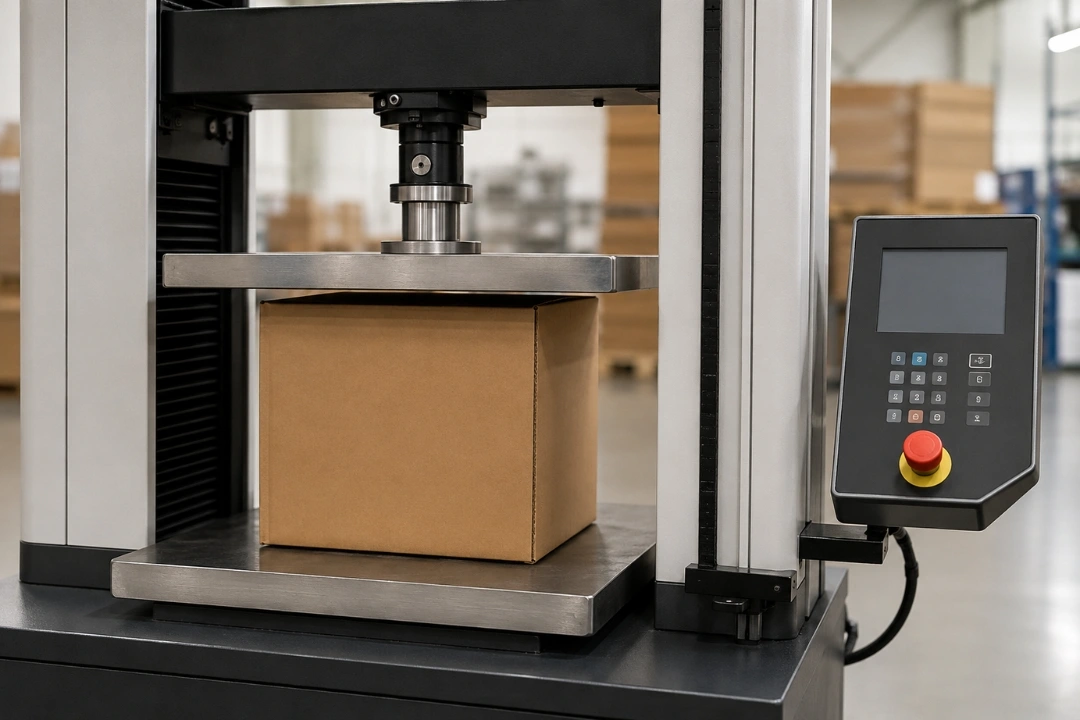
Box Compression Test machine measuring the compression strength of a corrugated shipping box during laboratory packaging quality testing

A Box Compression Test (BCT) measures how much vertical load a fully assembled corrugated box can take before it buckles. The box is placed between two flat steel plates on a compression tester, and the top plate pushes down at a fixed speed until the box collapses. The peak force recorded, usually in Newtons or kilograms-force, is the BCT value – and it’s the single number that tells a packaging buyer whether a carton can survive a warehouse stack or a shipping container without crushing whatever is inside. If you manufacture, print, or convert corrugated packaging, this number decides more than it looks like it should. Get it wrong and you either ship damaged goods or overbuild every carton and burn margin on board you didn’t need.   Why BCT Matters More Than People Think Picture a pallet stacked six-high in a warehouse for three weeks, then loaded into a truck, then sitting in a hot container for another ten days. The bottom box isn’t just holding its own weight – it’s holding everything above it, for the entire duration, in whatever humidity the environment throws at it. Corrugated board is paper, and paper absorbs moisture. A board that tests fine at 50% relative humidity can lose 30-40% of its compression strength at 80% RH, and more than half at 90%. Add creep – the slow sagging that happens under any sustained load, even in dry conditions – and a box that survives five minutes on a lab platen can still fail after three weeks in storage. That gap between “passed the test” and “survived the supply chain” is why BCT exists as a formal, repeatable measurement instead of a guess.   How the Test Actually Works The process is simpler than the physics behind it. Condition the sample: The box sits at standard temperature and humidity (usually 23°C, 50% RH) for at least 24 hours, so moisture content doesn’t skew the result. Place it on the platen: The empty box – sometimes with dividers or a dummy load, depending on the spec – sits flat between the tester’s base and its moving top plate. Apply the load: The top plate descends at a controlled, constant speed, typically around 12.5 mm per minute, pressing evenly across the top surface. Record the peak: The machine logs force continuously. The highest reading, taken right before the walls buckle outward, is the BCT value. Compare against spec: That number gets checked against the design requirement for product weight, stack height, and storage duration. The whole test takes a few minutes per box, which is why converters keep a compression tester on the shop floor instead of sending samples to an outside lab every time.   The Standards Behind the Number A BCT value only means something if it was measured the same way everywhere. That’s what standards are for: ASTM D642 – the most widely used North American standard for compression testing of shipping containers. TAPPI T804 – the pulp and paper industry’s compression test method, common in mills and board plants. ISO 12048 – the international standard, used when a box has to satisfy buyers across multiple regions. None specify how strong a box must be – that’s a business call based on the product and route to market. What they specify is how the test must be run, so a reading from one lab means the same thing as a reading from another.   BCT vs. ECT vs. Mullen: Don’t Mix These Up Buyers confuse these three constantly, and it causes real problems on the production floor. Test What It Measures Predicts Unit BCT Whole-box compression strength Stacking performance N or kgf ECT Edge compression strength of the board itself Contribution to stacking strength kN/m Mullen (Burst) Puncture resistance under hydraulic pressure Rough-handling durability kPa or psi ECT is tested on a small strip of board, not a full box, and it’s the input most commonly used to predict BCT before a box is even built – through the McKee formula, which estimates compression strength from ECT, board thickness, and box perimeter. It’s a useful starting point for design, but it’s still an estimate. Actual BCT testing on the finished box is what confirms the design holds up, especially for non-standard box styles where the formula’s assumptions don’t apply cleanly. Mullen tells you almost nothing about stacking strength. A box can have excellent burst resistance and still crush under a pallet load, because puncture resistance and compression resistance come from different structural properties of the board.   What Actually Changes a Box’s BCT Value A handful of variables move the number up or down, sometimes by a lot: Wall construction – single, double, or triple wall board raises BCT substantially, along with material cost and weight. Flute profile – A, B, C, and E flutes behave differently under load; C-flute is the common choice for general shipping, B-flute for retail-ready cartons. Box geometry – a tall, narrow box loses strength faster than a short, wide one made from the same board. Liner and paper quality – higher basis weight and better fiber quality in the liners raise both ECT and BCT. Print and coating – heavy ink coverage or laminate can stiffen or weaken panels depending on how it’s applied. Environmental exposure – as covered above, humidity and time under load both erode the number the lab reported.   Where Box Construction Fits Into the Equation BCT is a test result, but the box’s actual strength gets built long before it reaches a compression tester – on the die-cutting, folder-gluing, and lamination lines that turn flat board into a finished carton. A misaligned crease, an inconsistent glue bond, or an uneven laminate can weaken a panel in ways that don’t show up until the box is under load. Converters running high-precision equipment tend to see tighter, more predictable BCT results across a batch, instead of wide swings between boxes made to the same spec. At Robus India, this is the layer … Read more

How Robus India Customers Increased Output by 35% Without Expanding Their Factory Space

Increase packaging output with Robus India automatic folder gluer machine operating in a modern packaging manufacturing facility.

When Rohan Kaicker, Marketing Director at Cliffton Packagings, was evaluating new machinery, he wasn’t looking for a dramatic change. He was looking for something reliable and cost-effective. What he got was a 35% increase in packaging output – without touching a single wall of his factory. “It is cheaper by around 30% and offers production capacity by more than ~35% with low wastage,” he said after installing a Robus India Automatic Folder Gluer. For Indian packaging manufacturers who need more output but can’t afford to expand, that result is worth understanding properly.   Why Most Factories Can’t Increase Packaging Output the Way They’re Trying The instinct is predictable: more output means more space. A bigger plant, another production line, a night shift. These options exist, but they’re expensive, slow to implement, and often unnecessary. Most packaging lines are not running at their actual capacity. They’re running at the capacity their weakest point allows – and that weakest point is rarely the square footage. It’s usually the machine. For folding carton and corrugated box manufacturers, the bottleneck is typically in the folder-gluer line. Manual feeding, inconsistent gluing, and slow job changeovers all cut into what the machine could theoretically produce in an eight-hour shift. Fix those three things, and packaging output goes up – on the same floor, with the same team.   What Robus India Machines Do Differently Robus India manufactures folder gluers, die cutters, flute laminators, and hot foil stampers for folding carton and corrugated packaging lines. Established in 2016 and based in Greater Noida, they have installed over 410 machines across India. Here’s where their automatic folder gluers change the numbers: Consistent Speed, Not Burst Speed A line that hits 200 cartons per minute for 20 minutes, then stalls for a manual feeding correction, produces less than a line running 140 cartons per minute without interruption. Robus India’s automatic feeding and stacking system removes the start-stop pattern that kills effective hourly output on semi-automatic setups. Glue Precision Reduces Rejections Every rejected carton is a production slot that generated nothing saleable. Robus India’s gluing units apply adhesive at consistent pressure and temperature across the full run. Fewer rejects means the machine’s rated speed converts more directly into finished product – which is how you increase packaging output without running the line any faster. Faster Changeovers Add Hidden Hours Switching between carton sizes or box styles on an older machine can take two to four hours. On Robus India machines, that process is significantly shorter. For manufacturers handling multiple clients with different SKU requirements, reclaimed changeover time is effectively free production capacity.   The Floor Space Reality Robus India’s automatic line consolidates what previously required multiple stations into one integrated machine. A pre-upgrade setup often looks like this: Manual feeding table – 1 operator Semi-automatic folder gluer – 1 to 2 operators Manual stacking and banding – 1 to 2 operators After switching to a Robus India automatic folder gluer, most plants run the same process with one operator. The footprint shrinks. The headcount drops. The output rises. That combination – smaller footprint, fewer people, higher throughput – is exactly how Cliffton Packagings increased packaging output by 35% without expanding their facility.   What the Numbers Look Like Robus India machines are priced approximately 30% below comparable imported alternatives, based on Cliffton Packagings’ own evaluation. Combined with the output improvement, the payback period for most customers lands between 18 and 36 months – faster for operations that were previously turning away orders or running overtime to meet demand. Across the packaging equipment industry, the shift from semi-automatic to fully automatic folder gluers consistently delivers 25 to 50% output gains, depending on the baseline. Robus India customers tend to land at the higher end of that range because the machines are designed around Indian production conditions – variable power supply, mixed operator skill levels, and the need for straightforward maintenance without specialized on-site engineers.   Signs Your Line Has an Output Problem, Not a Space Problem Before committing to a facility expansion, check whether any of these apply: You’re running one shift but still missing delivery deadlines Glue rejection rates are above 2 to 3% per run Job changeovers regularly take longer than 90 minutes You’re quoting customers longer lead times than your order volume justifies Operators are managing three or four manual steps per carton These are machine efficiency problems. More floor space won’t solve them.   What Customers Report After 12 Months Jayesh Patel, MD of Kalhar Packaging, noted that the Robus India machine runs with “almost no sound and vibration.” That matters because vibration causes folding misalignment over long runs – one of the most common sources of quality inconsistency on budget machines. Installation is also straightforward. Robus India’s team handles commissioning and operator training on-site, which reduces the risk of a new machine sitting idle while the plant figures out setup independently.   The Right Question to Ask First Before looking at new buildings or additional shifts, the better question is: what is your current line capable of, and what is actually preventing it from running at that level? For most folding carton and corrugated manufacturers in India, the answer is in the folder gluer. A machine that feeds automatically, glues precisely, and changes over quickly will increase packaging output on the same floor it’s already standing on. Cliffton Packagings found that out. So did Kalhar Packaging. So have over 400 other manufacturers across India who chose Robus India.

Food-Grade Carton Packaging: What Machines & Standards Indian FMCG Brands Must Follow

Food-Grade Carton Packaging production line featuring carton packaging machines, food-safe paperboard cartons, and FMCG packaging materials in a modern manufacturing facility.

Walk into any supermarket in India and pick up a box of biscuits, a cereal pack, or a tea carton. What you’re holding is a food-grade carton – and getting it right involves a lot more than printing a logo on cardboard. For Indian FMCG brands, this is where things get serious. FSSAI tightened its grip on packaging compliance in 2025, reclassifying food-grade packaging materials from “non-critical” to “critical” during inspections. That single regulatory shift changed how packaging lines need to be set up, what documentation brands must maintain, and what machines they actually need on the floor. This article breaks down the full picture: the standards you must meet, the machines that get you there, and where most brands quietly get it wrong.   What Makes a Carton “Food-Grade”? A carton qualifies as food-grade when the materials used – paperboard, adhesives, inks, coatings, and laminates – do not transfer harmful substances into the food product they contain. Under the Food Safety and Standards (Packaging) Regulations, 2018, all food contact materials in India must comply with Bureau of Indian Standards (BIS) specifications listed in the regulation’s schedules. For paper and paperboard, this means the raw substrate must be free from contaminants and meet the IS standards cited in Schedule I of the regulations. There are two categories worth understanding: Primary packaging: the carton surface in direct contact with food. Think of the inner lining of a cereal box or the base of a sugar sachet tray. Any coating, film, or adhesive here must be food-safe and tested accordingly. Secondary packaging: the outer carton that holds primary packs. These still need to meet general material standards but have slightly more flexibility. Where brands trip up: using standard commercial-grade boards sourced from regular paper mills without verifying IS compliance, then discovering the gap only during an FSSAI inspection.   The Regulatory Checklist Indian FMCG Brands Must Clear FSSAI (Packaging) Regulations, 2018: This is the primary law. It replaced the 2011 packaging and labelling regulations and covers migration limits, approved substances, and BIS references for each material type. The regulation sets an overall migration limit of 60 mg/kg or 10 mg/dm² for packaging materials. NABL-Accredited Certification: Since April 2025, FSSAI inspectors now check whether packaging materials carry a Certificate of Conformity issued by a NABL-accredited laboratory. This isn’t optional. Brands need to maintain these records at the facility and have them available during audits. BIS Standards for Paperboard: Boards used in food cartons must conform to IS specifications under Schedule I. The specific IS numbers vary by material type – your board supplier should be able to confirm which standard applies to their product. Food-Grade Inks and Adhesives: Printing must not appear on the inner surface that contacts food. The inks used on outer surfaces must also be approved food-grade formulations. Similarly, the adhesive used in folder gluers must be food-safe – a detail that gets overlooked more often than it should. Tamper Evidence: For certain categories like spices and milk powder, FSSAI requires tamper-evident closures. The gluing and folding quality of the carton directly affects whether this requirement is genuinely met or just nominally satisfied.   The Machines Behind a Compliant Food Carton Production Line Sourcing food-grade board is step one. Converting that board into finished, inspected, shelf-ready cartons at volume is the harder part – and it’s where the right machines make the difference. Automatic Die Cutter This is where flat sheets are cut and creased into the exact blank shape the finished carton will take. For food packaging, precision here is non-negotiable. A misaligned crease line means corners that don’t fold cleanly – and poorly sealed carton corners are a direct contamination risk for dry food products. High-speed automatic die cutters maintain cut-to-crease accuracy across long production runs, which is where most semi-automatic machines struggle. Automatic Folder Gluer After die cutting, blanks move to the folder gluer, where they’re folded into box shape and sealed with adhesive. For food-grade production, two things matter here beyond speed: the glue must be food-safe and applied consistently, and the machine must handle the board without contaminating it through oil, debris, or excessive mechanical contact. Modern servo-driven folder gluers handle this far better than older belt-driven systems. Brands producing mono cartons for cereals, biscuits, confectionery, and dry snacks will spend most of their machine budget here – and should. Automatic Flute Laminator For heavier FMCG cartons – the kind used for multi-pack products, larger grocery items, or anything that needs to survive retail shelf stacking – flute lamination adds a corrugated layer to the base sheet, increasing crush resistance and rigidity. The lamination adhesive used in food-adjacent applications needs to be specified carefully with your machine supplier. Inspection Systems (Inline) This is where a lot of smaller brands cut corners and later pay for it. Inline vision inspection systems – often available as integrated modules on folder gluers – check for print registration errors, missing perforations, incorrect glue patterns, and blank orientation issues. For food brands running high-volume lines, catching a bad batch before it reaches the warehouse is far cheaper than a recall.   Common Mistakes That Cause Compliance Failures Buying machines without checking glue compatibility: Folder gluers come set up for standard cold glue. If your application needs food-safe hot melt adhesive, this has to be specified at the time of purchase – retrofitting is expensive. Skipping the NABL test on board procurement: Many converters source board without confirming the supplier’s IS compliance documentation. In the post-2025 inspection environment, this is audit exposure. Treating secondary packaging as out-of-scope: Even cartons that don’t touch food directly can fail inspection if the materials don’t meet FSSAI general requirements. Ignoring ink migration on printed surfaces: Solvents from UV or solvent-based inks can migrate through paperboard into food. Using approved food-grade inks is a regulatory requirement, not just a best practice.   Getting the Production Setup Right For Indian FMCG brands scaling up packaging capacity, the decision isn’t just about machine speed – it’s about … Read more

E-Commerce Returns & Damaged Boxes: How Corrugated Box Making Machines Reduce Loss

E-Commerce Returns packaging image showing damaged and secure corrugated boxes in a modern warehouse with box-making machines

Nobody talks about how expensive a return actually is. You sell a product for ₹800. The customer gets it with a dented corner, a cracked lid, or a shattered screen. They raise a return request. You spend another ₹150–₹400 on reverse logistics, restocking, re-inspection, and re-dispatch. In some cases, the product can’t even be resold. That ₹800 sale just turned into a net loss. This is the reality of e-commerce returns in India and globally, and it happens every day – at scale. What’s wild is that most of this is preventable. Not through better policies or faster customer support, but through better boxes.   The Numbers Behind E-Commerce Returns Are Hard to Ignore Global merchandise returns crossed $890 billion in 2024. The e-commerce return rate was 16.9% last year and is expected to hit 19.3% in 2025. In India, return rates on platforms like Meesho and Flipkart routinely run between 20% and 40% depending on the category. The bigger problem inside these numbers: 80.2% of returns happen because the product arrived damaged. Not the wrong size. Not changed mind. Damaged. And here’s the part that should bother anyone running an e-commerce or packaging business – 51% of customers who receive a damaged shipment don’t buy from that brand again. They don’t complain loudly, they just leave. That’s the damage you don’t see on a returns dashboard.   Why Boxes Actually Fail in Transit A corrugated box failure during shipping is rarely random. There are a handful of reasons it keeps happening, and they’re all fixable. The box is the wrong size: When a box is too big for the product inside, the product moves. It shifts, bounces, collides with itself or the sides. That movement causes damage – especially for anything fragile, electronic, or with sharp edges. Undersized boxes have the opposite problem: the flutes get crushed under external pressure, and the structural integrity collapses. The board strength doesn’t match the product weight: A single-wall corrugated board works fine for a 500g item. Use the same board for a 5kg appliance, and it won’t survive three handling points. The edge crush test (ECT) rating needs to match the actual load – and it often doesn’t when brands order generic stock boxes. Glue joints and folds are inconsistent: In high-volume manual or semi-manual operations, box assembly quality varies. A weak glue line or an uneven fold means the box opens at a seam under pressure. It doesn’t take much – one drop, one compression on a conveyor – and the product is exposed. Each of these failure points happens before the courier ever picks up the shipment. They’re baked into the packaging at production time. That’s where the fix needs to happen too.   What Better Machines Actually Change The connection between machine quality and e-commerce return rates is direct, even if it’s not talked about enough. Folder Gluer Machines The folder gluer is what assembles the flat sheet into a finished box. When a folder gluer is running precisely – consistent glue pressure, accurate folding alignment, correct speed calibration – the boxes it produces are structurally sound every single time. The seams hold. The corners are clean. When the machine is old, poorly calibrated, or running too fast for the board type, defects get baked in. Not every box fails, but enough do that the return rate climbs. Robus India’s Automatic Folder Gluer Machines – built in three series: Excellence, Performance, and Confidence – are designed for corrugated carton production with high-precision folding and consistent glue application. For e-commerce brands dealing with high SKU volumes, this kind of consistency matters more than most realise.   Die Cutting Machines Die cutting is what gives each box its exact dimensions. A precise die cut means the box folds cleanly, closes tightly, and fits the product with minimal void space. Void space is underrated as a damage source. Every centimetre of space inside a box is room for the product to move. Custom die-cut boxes – sized specifically for a product’s actual dimensions – remove that space. Products arrive the way they were packed. Robus India’s Automatic and Semi-Automatic Die Cutting Machines handle a range of corrugated sheet sizes, which makes it practical to produce custom box profiles for different SKUs without massive setup overhead.   Flute Laminator Machines For heavier products – electronics, kitchenware, large D2C shipments – single-wall board just isn’t enough. 3-ply and 5-ply corrugated board absorbs significantly more impact and resists compression under warehouse stacking loads. Robus India’s High Speed 3-Ply and 5-Ply Flute Laminator (Model: RI-3LF-1450HS) produces multi-wall corrugated board at production speed. For any brand that’s repeatedly seeing damage on heavier items, switching to a higher-ply board is often the fastest fix.   Right-Sizing Is Where Most of the Gains Come From There’s a concept in packaging called right-sizing – it just means making a box that fits the product. Obvious in theory, rarely done well in practice. Most Indian e-commerce sellers work with 8–12 standard box sizes and try to fit hundreds of SKUs into those. It works well enough until it doesn’t – until a customer posts a photo of their product rattling inside a box three times too large, or arrives with half the corner caved in. Right-sized boxes cut internal product movement to nearly zero. They also reduce DIM weight shipping costs, which for high-volume sellers can be a significant monthly saving. And they use less material per box, so the cost per unit drops. Getting there requires a machine setup that supports custom sizing – automated die cutting and folder gluing that can shift between box dimensions quickly. Robus India’s E-Commerce & Q-Commerce Box Making Machine was built specifically for this: fast format changes, high output, and accurate dimensions across a wide range of box sizes.   Packaging Is Part of the Brand, Whether You Think About It or Not There’s a reason unboxing videos exist. Customers notice packaging. A box that arrives clean, intact, and well-formed tells them something … Read more

What is Post-Press in Printing? Everything You Need to Know

What is post-press in printing shown through packaging finishing processes including die cutting, lamination, foil stamping, embossing, and folder gluing machines.

What is post-press in printing? It is every process that happens after the ink dries. The sheet comes off the press – and that is actually when the real work begins. Cut it. Score it. Fold it. Laminate it. Glue it. Sometimes foil it or emboss it. All of that happens before the carton, box, or printed piece is ready for use. Most people in print spend months obsessing over colour accuracy and artwork approvals. Post-press gets maybe 10 minutes of planning time. That is backwards – because a beautifully printed sheet can still end up looking terrible if the die cut is rough, the fold is off by a millimetre, or the lamination bubbles at the edges. In packaging especially, post-press is where the customer experience is made or broken. A consumer never reads the press spec sheet. They pick up the box, feel the surface, open the flap. Every one of those moments is a post-press result.   Pre-Press, Press, Post-Press – Quick Breakdown Before going further, here is where post-press sits in the production chain: Pre-press – artwork setup, colour management, plate-making, proofing. Getting the file print-ready. Press – the actual printing. Offset, digital, flexo, gravure – ink or toner hits the substrate. Post-press – everything after. Cutting, finishing, folding, binding, decorating. Turning a printed sheet into a usable product. Each stage feeds the next. A substrate chosen at pre-press affects how lamination behaves at post-press. A registration issue at press shows up as a misaligned crease later. You cannot fix upstream problems downstream – which is why post-press planning needs to start at the design stage, not at the end of a print run. For broader context on print production standards, the Printing Industries of America is worth bookmarking.   The Post-Press Processes That Actually Matter in Packaging Die Cutting This is probably the most talked-about post-press process in carton packaging – and for good reason. Die cutting uses a steel-rule die to cut a printed board sheet into the exact shape of a box blank. But cutting is only part of it. The same die also: Creases the board along fold lines so it bends cleanly without cracking Perforates where tear-open features are needed Kiss cuts through one layer only – common with labels and sticker sheets A well-made die is precise to fractions of a millimetre. A worn or poorly made die shows immediately – rough edges, torn fibres, creases that crack on folding. Automatic die cutters run at high speeds with consistent registration. Robus India’s automatic die cutting machines cover both folding carton and corrugated applications, from the Die Confidence Series for standard runs to the Die Excellence Series for high-output lines.   Folding and Creasing Once the blank is cut and creased, it still needs to be folded and formed into a box. The crease lines created during die cutting are what make accurate folding possible. Crease depth and position matter a lot here. Too shallow and the board cracks. Too deep and it weakens the panel. Offset from the correct position and the assembled box will not square up. This is one area where machine calibration and operator experience genuinely separate good converters from mediocre ones.   Lamination Lamination puts a thin plastic film over the printed surface. It protects. It finishes. It changes how the packaging feels in the hand. The main types used in packaging: Gloss – punchy, reflective, makes colours pop Matte – flat and smooth, reads as premium Soft-touch – that velvety feel on high-end cosmetics boxes Anti-scuff – resists scratching through the supply chain Film can be applied sheet-to-sheet or reel-to-sheet depending on the machine and the job. Robus India’s automatic film lamination range covers both formats – including reel-to-reel for continuous high-speed runs. One thing worth knowing: lamination choice affects everything downstream. A heavily laminated sheet creases differently, glues differently, and cannot be recycled the same way as unlaminated board. These decisions need to be made before print, not after.   Hot Foil Stamping Hot foil stamping presses a metallic or coloured foil onto the board using heat and a shaped die. Where die meets surface, the foil transfers. The result is sharp, reflective, and immediately communicates quality. Gold, silver, holographic, rose gold, matte black foil – the options are wide. It is used heavily on: Luxury cosmetics and perfume packaging Confectionery and premium food boxes Pharmaceutical cartons needing decorative brand elements Spirits and premium beverage cartons According to Tamarack Products, the tactile and visual impact of foil on packaging measurably improves consumer connection with the product – and that translates directly to shelf pick-up rates. Robus India manufactures automatic hot foil stamping machines across three series, handling different sheet sizes and production volumes.   Embossing and Debossing No ink. No foil. Just pressure and a shaped metal die – and the result is a raised (emboss) or sunken (deboss) design pressed into the surface of the board. Used on rigid boxes, premium cartons, and pharmaceutical packaging where Braille text is a legal requirement. Robus India also produces an inline Braille rotary embossing machine specifically for pharma carton lines where Braille compliance is non-negotiable in markets like the EU and UK. The effect is purely tactile – and that tactile difference is exactly why luxury brands use it. Customers feel the brand name before they read it.   Varnishing and UV Coating Varnishing puts a clear coat on the printed sheet. Flood varnish covers the full surface. Spot UV targets specific areas – a logo, a product image, a headline. Spot UV is probably the most visually striking of the standard finishing options. The contrast between a matte laminated background and a high-gloss UV spot is sharp and clean, and it costs significantly less than foil. UV coating cures instantly under ultraviolet light, which keeps production moving at speed. It also adds scratch resistance and protects ink from moisture – useful for packaging that sits in retail environments for extended periods.   Folder Gluers … Read more

Automatic Packing Machine: How It Works and Which Industries Need It Most in India

Automatic Packing Machine in operation with VFFS system and conveyor-based packaging line in a modern industrial setup

Automatic Packing Machine adoption in India has picked up pace over the last five years, and not just in large factories. Mid-size food units, carton manufacturers, and pharma companies are all moving in this direction. The reason is fairly straightforward, labour availability is getting trickier, order volumes are going up, and buyers want consistent packaging across every batch. India’s packaging industry is currently valued at over Rs 3.7 lakh crore and growing at roughly 14% per year. That growth puts pressure on manufacturers to pack more, faster, without proportionally increasing their workforce.   How an automatic packing machine actually works The basic job of any packing machine is the same, take a product, put it in packaging, and seal it. What changes is how much of that cycle runs without someone physically doing each step. In a fully automatic setup, the process runs roughly like this: The product comes in through a hopper or conveyor feed. The machine measures the right quantity, using an auger for powders, a cup filler for granules, or a multihead weigher for mixed or irregular items. The packaging film or carton blank is positioned, formed around the product, then sealed using heat or adhesive. A batch coder prints the MFD, expiry, and MRP inline. Finished packs go out on a discharge conveyor. A PLC (Programmable Logic Controller) manages all of this simultaneously. Sensors check for empty pouches, overfills, or seal failures and can stop the line automatically if something is wrong. That is why packing accuracy on these machines tends to be much better than what a manual line achieves, especially over long production runs.   Types of machines and what they handle Not every product needs the same machine. Here are the main types used across Indian industries: VFFS machines (Vertical Form Fill Seal) are the most common in food and FMCG. Film rolls feed from a reel, form into pouches vertically, fill from above, and seal. Speeds range from 40 to 120 pouches per minute depending on product and pouch size. Spices, flour, snacks, coffee, and tea are typical applications. HFFS machines (Horizontal Form Fill Seal) work better for products that cannot be dropped vertically, biscuits, soap bars, medical devices. The product moves horizontally through the wrapping zone. Folder gluer machines are built for carton packaging. A flat printed carton blank goes in, gets folded at precise crease lines, glued, and stacked. These run at very high speeds, production lines in carton units can fold and glue hundreds of cartons per minute. Automatic die cutters sit before the folder gluer in the workflow. They cut carton shapes from printed sheets with consistent pressure and precision. Without accurate die cutting, the folding stage will produce misaligned boxes. Flute laminators are used to laminate corrugated layers onto carton boards before cutting. They are standard in units, making boxes for the e-commerce, electronics, or pharma sectors where board strength matters. Rotary pouch packing machines handle pre-formed pouches, common for liquids, pastes, and thick granules. The dairy, sauce, and personal care sectors use these regularly.   Which industries in India use these machines the most Food processing This is the biggest segment by volume. A spice company packing 300 SKUs a day cannot run that on a manual line without employing a large workforce and still getting inconsistent fill weights. A VFFS machine with a multihead weigher handles multiple pack sizes with the same equipment, and fill accuracy is repeatable batch after batch. FSSAI also requires proper date coding and tamper-evident packaging. Automatic machines handle both inline, which removes a separate manual step. Pharmaceuticals Pharma packing requirements in India are among the tightest, whether a unit is targeting domestic CDSCO compliance or export to regulated markets. Blister packaging, strip packing, and carton erecting lines all need to run with minimal human contact on the product, consistent dose counts, and integration with serialisation systems for track and trace. Any pharma facility aiming for WHO-GMP or US FDA registration needs packing automation. There is no way around it. FMCG and personal care Detergent sachets, shampoo pouches, and household product packaging run on multi-track machines that produce several pouches simultaneously across parallel lanes. One line can replace what would otherwise need 15 to 20 workers on a shift. Brand consistency is another reason FMCG companies invest here. Retailers and modern trade buyers are particular about packaging dimensions and seal quality. A machine produces the same pack every time; a manual line does not. Printing and carton manufacturing Every pharma box, food carton, and retail pack in India starts as a flat sheet. Folder gluers, die cutters, and lamination machines are the backbone of the carton converting industry. A folder gluer running at 250 to 300 metres per minute can produce thousands of finished cartons per hour. The output from these machines feeds the food, pharma, and e-commerce sectors directly. Units without this equipment simply cannot compete on volume or price. Agrochemicals and fertilisers Seed packets, pesticide pouches, and fertiliser bags all need packing lines that can handle dusty, abrasive, or chemically reactive materials. Stainless steel contact parts and airtight sealing are required to maintain shelf life and meet labelling regulations under the Insecticides Act and Fertiliser Control Order. These products are also sold in rural markets where packaging damage during transport is a real concern. A well-sealed machine pack holds better than a hand-tied bag. Chemical and industrial goods Detergents, dyes, and adhesives in powder or liquid form need corrosion-resistant machines that seal reliably. Packing errors here are not just a quality issue, a leaking chemical pouch on a retail shelf is a liability problem.   Practical things to check before buying Speed and price are what most buyers look at first. They are not the most important factors. What actually affects your decision more: Whether the machine handles your specific product type (sticky powders behave differently from free-flowing granules) How long changeover take when switching between pack sizes Where the manufacturer’s service team is located and how fast … Read more

Looking for a Braille Machine with Standard Marburg Medium?

Kindly fill out the form below to request more information.