

Live Demo :

ROBUS INDIA at CHINA PRINT 2025 | Discover how we enhance your packaging production with precision and efficiency! | Meet us at Booths: W2-007 (Dayuan), A3-522 (YCIA), E4-001/002 (Xinxing) | 15–19 May 2025 | China International Exhibition Center (Shunyi Hall), Beijing | info@robusindia.com | +91 81783 09461 | www.robusindia.com
12TH – 16TH OCTOBER 2026

4-corner and 6-corner box gluing: machine requirements explained
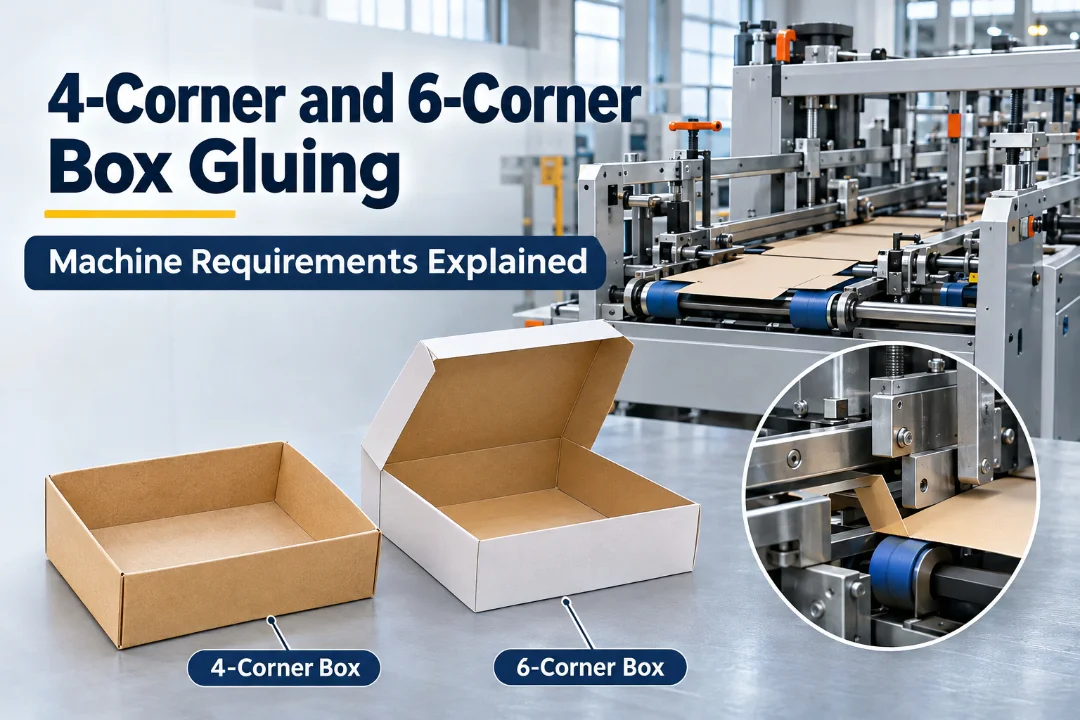
4 and 6 corner box gluing machine folding and gluing carton blanks on an automatic folder gluer

A standard folder gluer can’t make a 4-corner or 6-corner box. It folds along straight lines and glues one seam. Corner boxes ask for more: the machine has to fold back panels, hold them, and glue every corner before the tray takes shape. That’s the job of a 4 and 6 corner box gluing machine, which is a folder gluer fitted with extra folding hardware and tighter control. Below you’ll find what that hardware is, what to check before buying, and where buyers go wrong.   What does a 4 and 6 corner box gluing machine need? A 4 and 6 corner box gluing machine needs a dedicated corner module with servo-driven folding hooks, multi-point glue application, an accurate feeder, adjustable conveyor belts and saved job settings for quick changeovers. A straight-line setup alone can’t fold and glue corner flaps accurately at production speed.   4-corner vs 6-corner boxes A 4-corner box is a tray: one base, four walls, and a glued flap at each corner. Most are open-top. Food trays, e-commerce boxes and retail packs are typical uses. A 6-corner box adds two more glued corners, usually because the blank carries an extra panel such as an attached lid or a second wall. More panels mean a longer folding sequence and more room needed in the folding section. 4-corner box 6-corner box Glued corners 4 6 Typical form Open tray Tray with an extra panel, such as an attached lid Folding demand Back-fold of four flaps Longer fold sequence Machine need Corner module Corner module with more folding space The six requirements that matter Corner module with hook folding The hooks do the hard work. They catch the rear flaps and fold them back while the blank keeps moving. Robus India’s 4 & 6 corner attachment uses a servo-driven hook system with photoelectric sensors for the back-folding step. A servo drive makes settings easier to repeat than manual adjustment, so ask any supplier how their hooks are driven. Enough folding length Corner boxes need more fold distance than straight-line cartons, which is why some builders add an extended folding and closing section. Compare that section’s length with your largest blank, not your average one. A glue system built for several points Corner boxes glue in more than one place, so look for multi-nozzle heads and glue-line detection. Cold glue suits most uncoated board. Coated or laminated board often needs hot melt or varnish-free glue strips in the artwork. Settle this with your printer early, because the machine can’t fix a blank that has varnish on the glue flap. Feeder and belts that handle the blank Corner blanks show skew fast. A blank that enters the feeder tilted arrives at the delivery with a crooked corner. Automatic blank alignment shortens feeder setup, and upper carriers that lift for board thickness matter because microflute and 300 gsm carton don’t sit the same way in the same belts. Job memory and quick changeovers Changeover time decides whether corner boxes pay off on short runs. According to Bobst’s EXPERTFOLD 50 | 80 | 110 specifications, changeovers from crash-lock bottom to 4 and 6 corner settings can drop by up to 80%, and some box types switch in about five minutes. The same machine stores up to 5,000 job settings. You don’t need those exact figures. You do need recipe memory and motorised positioning, or every job starts from zero. Realistic speed and board range Ignore headline straight-line speed. Corner boxes run slower: Bobst lists up to 28,000 boxes per hour for 4 and 6 corner work on a machine rated far higher for general carton production. Ask for the corner-box figure on your own blank. Then confirm the board range. Bobst’s catalogue for the same series covers carton or solid board up to 800 gsm plus several corrugated grades.   Pick the machine width from the open blank Measure the flat blank, not the finished box. A tray blank with corner flaps is much wider than the box it makes. Robus India’s automatic folder gluer range covers 580 and 650 mm in the Confidence Series, 650, 850 and 1,100 mm in the Performance Series, and 850 and 1,100 mm in the Excellence Series. If your biggest blank sits close to a machine’s limit, go one size up.   Where buyers go wrong Demand is pushing the issue. Bobst told Labels & Labeling that growth in shelf-ready packaging is raising sales of gluers that can run crash-lock and, often, 4/6 corner boxes. Converters who rush in tend to make the same four mistakes: Buying on straight-line speed and finding out later that corner jobs run much slower. Skipping a trial on their own board and their own blank. Treating the corner module as an afterthought instead of a core spec. Training one operator and hoping the setup knowledge spreads on its own.   Checklist before you ask for a quote Open blank dimensions, plus board type and gsm Coating, varnish and glue-area plan Typical run length and expected changeovers per day Corner-box speed in boxes per hour, not metres per minute   FAQ What is a 4 and 6 corner box? It’s a tray-style box made from one flat blank with glued flaps at four or six corners. Six-corner versions usually include an extra panel, such as a lid. Can a standard folder gluer make 4 and 6 corner boxes? Usually not without a corner module. Some machines are built with it integrated, and others take it as an attachment. How fast does a 4 and 6 corner box gluing machine run? Slower than straight-line work. Speed depends on the machine, the blank and the board, so ask for a corner-box figure in boxes per hour. Which materials can it handle? Carton and corrugated board, within the range each machine lists. Check the gsm and flute limits against your own stock.   Planning a corner-box line? Send your open blank size and board spec to Robus India at info@robusindia.com and ask for a … Read more

How Foil Stamping Makes Packaging Look Fancy

How Foil Stamping Makes Packaging Look Fancy

Introduction Have you ever been drawn to a product just because of how beautiful the packaging looked? Maybe it had a shiny logo, a metallic label, or a glossy finish that made it feel luxurious. That’s often the effect of foil stamping—a printing method that adds sparkle and class to packaging. In today’s competitive market, packaging is more than just protection. It’s the first impression of your brand, and it can make that impression unforgettable. In this blog, we’ll explain what it is, how it works, why brands use it, and how it makes packaging look more attractive and premium. What is Foil Stamping? Foil stamping is a printing process that uses heat and pressure to apply a thin layer of metallic or pigmented foil to the surface of packaging materials like paper or cardboard. Unlike regular printing, this process doesn’t use ink. Instead, it creates shiny or textured effects that catch the eye. You’ve likely seen it on luxury chocolate boxes, cosmetic cartons, invitation cards, or gift packaging. Gold and silver are the most common colors, but foils also come in red, blue, copper, rose gold, holographic, and matte finishes. The goal of foil stamping is to add richness and style that ordinary printing cannot match. How the Foil Stamping Process Works Foil stamping might sound complex, but when broken down, the process is straightforward. First, a metal die is created in the shape of the design—such as a logo or pattern—that needs to be stamped. This die acts like a heated stamp. Next, a roll of foil is chosen based on the desired finish. This could be metallic, holographic, or matte. Then, the heated die presses against the foil and the packaging material. The combination of heat and pressure causes the foil to stick to the material exactly where the die touches it. The final result is a crisp, shiny, and elegant design that becomes a permanent part of the package. Sometimes, this process is combined with embossing, which adds a raised effect, making the stamped area feel even more premium. Why Do Brands Use Foil Stamping? Brands use foil stamping because it transforms ordinary packaging into something special that connects emotionally with customers. It adds beauty, professionalism, and a sense of luxury to packaging, making it stand out on crowded shelves. The shiny finishes like gold and silver give packaging a high-end look, which helps customers associate the product with quality and value. Besides visual appeal, It also grabs attention by reflecting light, making packages more noticeable. This is crucial in stores where many products compete for attention. It is also a way to build brand value because it is often used in logos or product names, reinforcing an image of trust and excellence. Moreover, It  adds texture to packaging. When customers feel the raised or smooth areas, it creates a memorable and tactile experience that enhances brand perception. Foil stamping can be combined with other finishing techniques, such as embossing or soft-touch coatings, to create unique packaging designs that tell a brand’s story more effectively. This combination of effects helps make the packaging not just a container, but a key part of the product’s appeal. Different Types of Foil Used in Packaging Not all foil looks the same, and brands choose different types depending on the product and message they want to convey. Metallic foil is the most popular and usually comes in gold or silver shades, offering a bold and shiny finish that’s perfect for luxury packaging. Holographic foil is another option. It changes color depending on how light hits it, making the packaging fun and eye-catching. This type is often used for products targeting younger audiences or for limited editions. Matte or pigment foil, on the other hand, offers a softer, non-reflective finish for brands that want a modern or understated look. Pearlescent foil provides a subtle glow without strong shine, making it suitable for cosmetics and wedding packaging where elegance is key. Lastly, scratch-off foil is used mainly in promotions or gift cards, allowing customers to scratch away the foil to reveal hidden information or prizes. Where Foil Stamping Works Best Foil stamping adds value across many packaging categories, enhancing the look and feel of the product inside. For example, in the beauty and cosmetics industry,It is widely used on lipstick boxes, skincare kits, and perfume cartons to add a sense of luxury and sophistication. For gourmet foods and chocolates,It gives packaging a rich and festive feel, perfect for gifts or special occasions. In the alcohol industry, foil stamping on wine labels or gift boxes communicates tradition and elegance, increasing the perceived value of the product. Personal care and wellness products, such as shampoos, lotions, and premium soaps, often use It to reflect quality and attention to detail. Even stationery and gift boxes benefit from foil stamping, as it adds a classy and elegant touch to wedding invitations, notebooks, and corporate gifts. How Foil Stamping Helps with Marketing Packaging is often the silent salesperson, and foil stamping plays a crucial role in marketing and branding. When customers see shiny foil on packaging, they immediately associate it with high value and premium quality. This first impression can influence buying decisions in a significant way. It also enhances the unboxing experience. Customers enjoy the feel and look of foil-stamped packaging, which makes opening a product more special and memorable. This often leads to customers sharing their experiences on social media, giving brands free promotion and word-of-mouth marketing. Furthermore, the visual appeal of It improves brand recall, meaning customers remember the brand more easily and are more likely to buy from it again. Brands targeting premium market segments find that foil stamping boosts sales because it elevates the product’s perceived worth. When packaging looks expensive and carefully crafted, customers feel more confident in their purchase. Things to Consider When Using Foil Stamping While foil stamping offers many benefits, it requires careful planning and design. Due to the nature of the stamping process, simple and bold … Read more

How Folder Gluer Machines Help Make More Cartons Faster

How Folder Gluer Machines Help Make More Cartons Faster

Introduction In today’s fast-paced world, packaging plays a big role in product safety, branding, and transportation. From cereal boxes to medicine cartons, we see folded cartons everywhere. But have you ever wondered how these cartons are made so quickly and in such large numbers? The answer lies in folder gluer machines. These machines are key to making folding cartons fast, neat, and at scale. Whether you are in the packaging, printing, or consumer goods industry, folder gluers can help your business grow by saving time, reducing errors, and increasing production. In this blog, we’ll explore what a folder gluer machine is, how it works, and how it helps manufacturers make more cartons, faster and better. What is a Folder Gluer Machine? A folder gluer machine is a type of packaging machine used to fold and glue flat paperboard or corrugated board into finished cartons. It’s the last step in the carton-making process after printing and die-cutting. The flat, printed sheets are fed into the folder gluer. The machine then folds them into shape and applies adhesive (glue) in the right spots. After this, the cartons are pressed and delivered in stacks—ready to be filled with products. Folder gluer machines are widely used in industries such as: Food and beverages Pharmaceuticals Cosmetics Electronics E-commerce packaging How Does a Folder Gluer Machine Work? Folder gluer machines have several parts that work together in sequence. Here’s a step-by-step view of how the machine operates: 1. Feeder Section The feeder pulls in the flat carton blanks one at a time from a stack. This section ensures smooth feeding without jamming. 2. Pre-Break Section Some cartons have folds that are hard to crease later. This section pre-breaks or bends the folds slightly to make final folding easier. 3. Folding Section Using folding belts and guides, the machine folds the carton flaps according to the desired shape—like straight-line, crash lock, or 4/6 corner boxes. 4. Gluing Section As the flaps are folded, glue is applied using either cold glue or hot melt systems. The glue is placed with precision to avoid spills or weak joints. 5. Compression Section Once glued and folded, the cartons pass through pressure rollers that press them together to ensure the glue sets properly. 6. Delivery Section The finished cartons are collected, counted, and stacked for packaging or shipping. Some machines have automatic packing systems as well. Benefits of Folder Gluer Machines Using a folder gluer machine offers many advantages that help manufacturers speed up their packaging operations. Let’s take a closer look: 1. Faster Production Speed Manual carton folding and gluing are slow and inconsistent. A folder gluer machine can process thousands of cartons per hour, depending on the size and type. This high speed means more output in less time. 2. Consistent Quality Every carton is folded with the same precision, and the glue is applied at the exact spot every time. This improves the look, strength, and performance of the box. 3. Less Manual Labor The machine does most of the work. This reduces the need for manual workers and helps avoid fatigue or mistakes caused by repetitive tasks. 4. Reduced Waste Precise gluing and folding mean fewer misaligned or damaged boxes. This helps save raw materials and reduce waste. 5. More Versatility Modern folder gluer machines can handle many box types—straight-line, crash lock bottom, 4-corner, 6-corner, and more. This gives businesses flexibility in design and packaging. 6. Lower Costs Over Time Though the initial investment may be high, folder gluers save money in the long run by reducing labor costs, material waste, and time spent on rework. Use Cases in Different Industries Folder gluer machines are not just for large-scale factories. They are useful for small, medium, and large businesses across industries. Food Packaging Fast-moving products like cereals, snacks, and frozen foods need strong, attractive boxes. Folder gluers help produce these in bulk with strong glued flaps that hold up during transport and display. Pharmaceutical Packaging Accuracy is crucial in every type of Pharmaceutical Packaging. Folder gluers ensure tight seals and consistent quality to protect the product inside and meet health regulations. E-commerce and Retail With rising demand for quick packaging in online sales, folder gluer machines are perfect for producing ready-to-use cartons in a short time. Cosmetics and Personal Care Elegant packaging is important for beauty products. Folder gluers help maintain neat finishes and sharp folds that enhance product appeal. Advanced Features in Modern Folder Gluers Today’s folder gluer machines come with smart technology to further increase productivity and reduce downtime. Some features include: Touchscreen Controls: Easy setup and monitoring Servo Motors: More control over speed and movement Automatic Alignment Systems: Reduce human error Vision Inspection Systems: Detect glue or folding errors Barcode Scanners: For box identification and sorting These improvements help ensure high-quality production while reducing the chance of errors. How Robus India Helps with Folder Gluer Solutions At Robus India, we specialize in advanced carton packaging machinery including folder gluer machines that are ideal for both corrugated and paperboard cartons. Our folder gluer machines offer: High-speed performance Stable feeding Precise gluing technology Compatibility with different box styles Durable build and low maintenance We also provide training, technical support, and after-sales service, ensuring your team can operate the machine smoothly and efficiently. Whether you are upgrading from manual folding or expanding your production capacity, Robus India has the right folder gluer solution for you. Conclusion Folder gluer machines have revolutionized the way cartons are made. With the ability to fold and glue thousands of boxes per hour, these machines help businesses: Increase output Maintain consistent quality Reduce labor and costs Meet rising demand quickly If your business relies on packaging, investing in a folder gluer is a smart move. It’s not just about faster production—it’s about growing your efficiency and building a stronger, more reliable packaging system. Contact Robus India to explore our range of high-speed folder gluer machines and take your packaging process to the next level.